Phase II
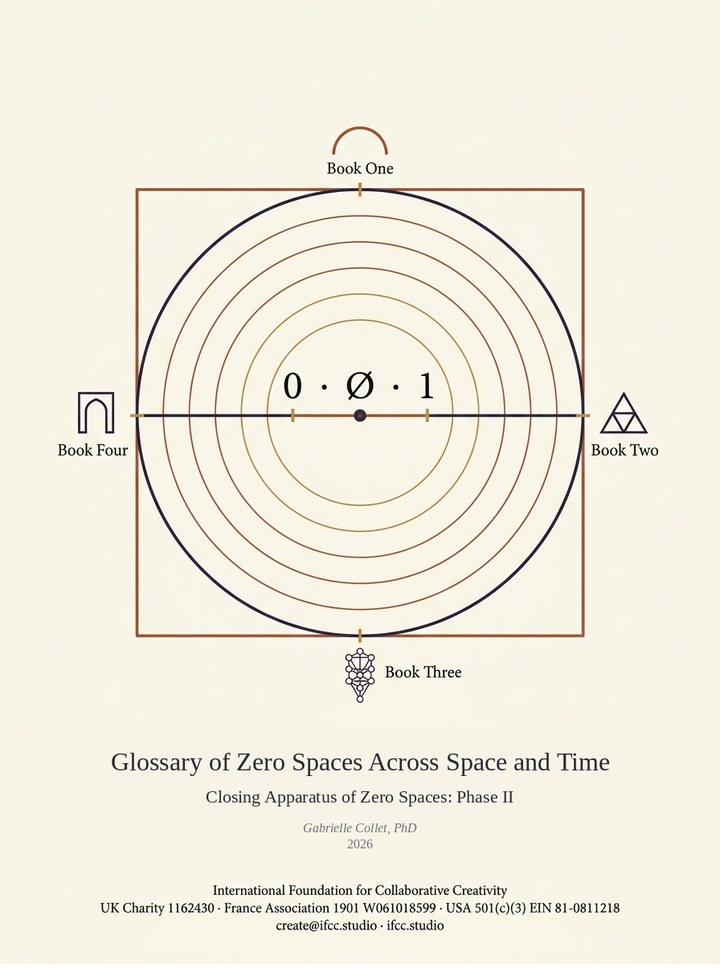
Zero Spaces: Phase II. A four-volume cross-civilisational philosophical work continuing the 2014 first edition, with a Glossary of Zero Spaces Across Space and Time as closing apparatus.
A philosophical work in four volumes.
Complete. Forthcoming in publication.
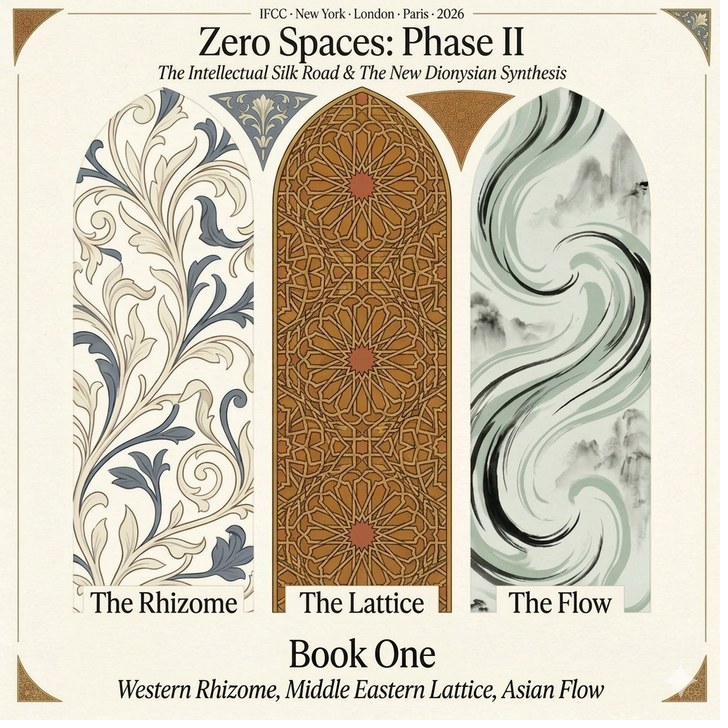
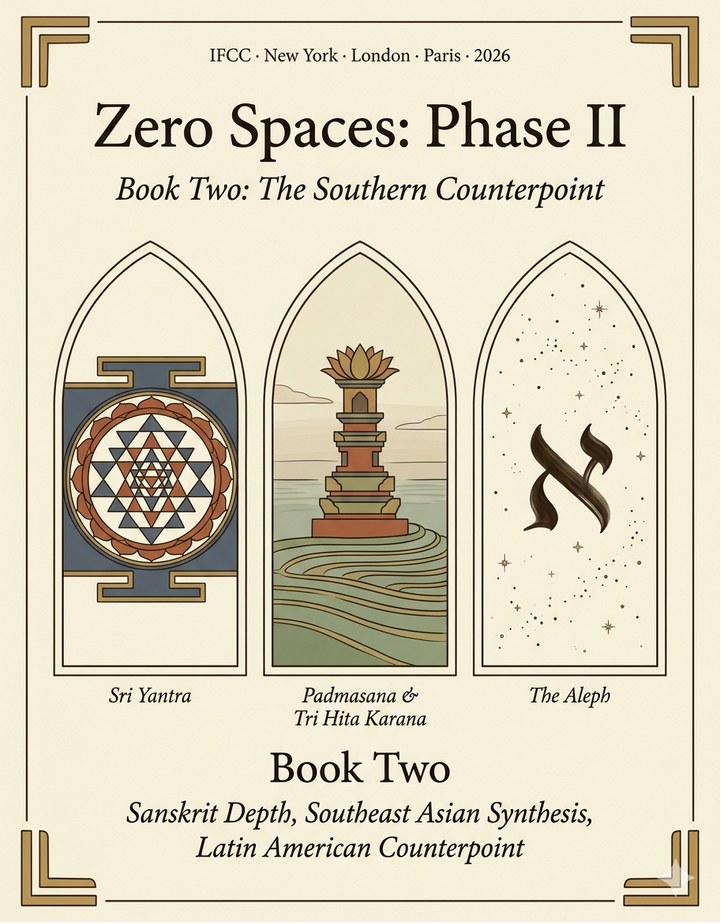
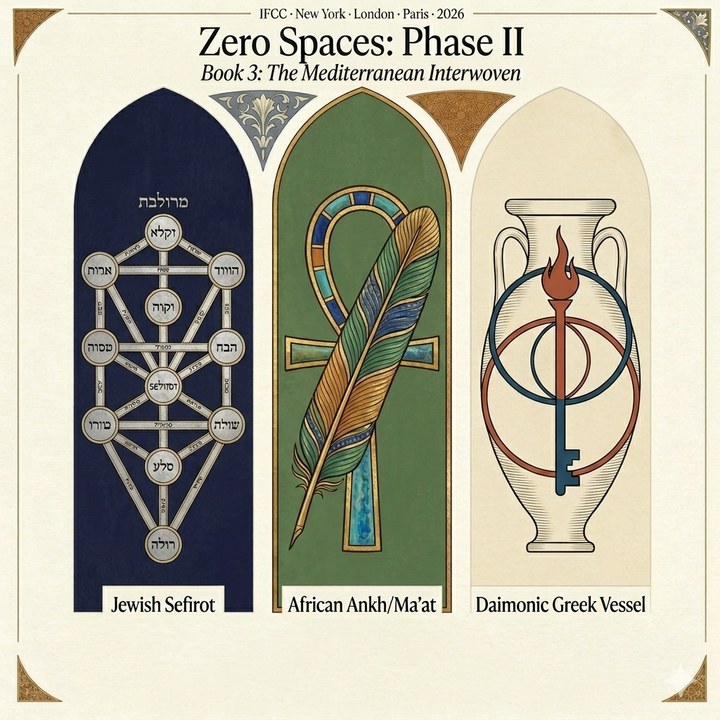

From forthcoming essay to integrated chapter.
Several titles that appeared in earlier institutional materials as forthcoming essays have since become chapters of the completed four-volume work. The metamorphosis from essay-as-promise to chapter-as-foundation is itself a marker of the work’s movement: what was forthcoming has become foundation.
Chapters in the academic publication pipeline.
Several chapters from the four-volume work are currently under review at academic journals in philosophy of technology, AI ethics, and continental philosophy. The volumes themselves remain forthcoming as a complete work; individual chapters move through journal review as standalone articles.
- AI & Society Wú Wéi and the Algorithm — resubmission with explicit preprint disclosure
- Technophany A chapter from Book One under review
- Deleuze and Guattari Studies A chapter under editorial consideration
Publicly deposited; available to read.
A small number of papers have been deposited as open preprints in advance of the volumes’ publication. Each is marked as a preprint; the version of record will appear in the relevant journal or volume.
-
OSF · EdArXiv
Beyond Output: Cultivated Practice in the Age of Generative AI
Read on OSF → -
PhilPeople
Chapter preprints from Zero Spaces: Phase II, accessible through Dr. Gabrielle Collet’s academic profile.
View profile →
A continuation, not a replacement.
Phase II continues the philosophical work begun in Z(e)ro Spaces: Poïesis and the Art of Collaborative Creativity (Atropos Press, 2014). The 2014 first edition proposed the framework: the zero space as the pre-creative condition of genuine novelty, the Fictive World Formulae as the generative instruments through which new worlds are nourished into being, the Art of Collaborative Creativity as the practice through which the philosophical architecture might be enacted institutionally.
Phase II takes up what the first edition began. It develops the philosophical foundation across the cross-civilisational engagements the first edition gestured at without fully developing. It articulates the institutional form the framework was always oriented toward. The four-volume work is consolidated and complete; what now follows is publication, the founding work of the Laboratory, and the long horizon across which both will operate.